
Difference between Butter, Margarine and Mayonnaise
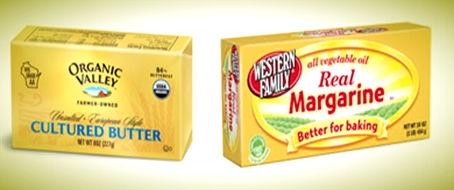
A vast majority of us are devouring a lot of the unhealthier, immersed fat which comes from animal products, in our weight control plans. Supplanting butter with margarine spreads is a simple approach to bring down our intake of saturated fat and rather incorporate healthier fats to reduce our risk of coronary illness. Little sums consistently signify substantial sums after some time. In this article, we will look at the differences between butter, margarine, and mayonnaise so that we can conclude which one is better.
Butter
Butter is a strong dairy item made by stirring new or aged cream or drain, to partition the butterfat from the buttermilk. It is by and large utilized as a spread on plain or toasted bread items and a topping on cooked vegetables, and in cooking, for example, preparing, sauce making, and searing. Butter comprises of butterfat, milk proteins and water.
Butter is a water-in-oil emulsion coming about because of a reversal of the cream, an oil-in-water emulsion; the milk proteins are the emulsifiers. Butter remains a strong matter when refrigerated; however, it mellows to a spreadable consistency at room temperature.
Margarine
Margarine is a replication spread utilized for spreading, heating, and cooking. It was initially made from hamburger tallow and skimmed milk in 1869 in France by Hippolyte Mège-Mouriès, as an after-effect of a test proposed by Emperor Napoleon III to make a substitute for spread for the military and lower classes. It would later be named “margarine”.
The advanced margarine is made primarily of refined vegetable oil and water, and may likewise contain milk. In a few areas it is casually alluded to as “oleo”, short for oleo-margarine.
Mayonnaise
Mayonnaise is shortened to mayo. It is a thick, cold condiment or dressing. It is commonly used in sandwiches, hamburgers, composed salads, or French fries. It is also used as a base in various sauces.
Butter vs. Margarine vs. Mayonnaise
While utilized for a large number of the same purposes, butter, margarine, and mayo are three different items. The essential component that separates them is from what products they are made, and therefore the sorts of fats they contain.
Etymology
- “Butter” comes from the Latin butyrum, which is derived from the Greek boutyron.
- Margarine is a Greek word for pearl margaritesor margaris.
- Mayonnaise is named after Port Mahon, which was itself named after its founder, Mago Barca.
History
- Butter’s use goes back a great many years.
- Margarine was invented in 1869 as a modest substitute for butter.
- Mayonnaise appeared in the French cookbooks in the 18th century. But traces of its existence in Spainand France are also found.
Ingredients
- Butter is made by agitating the cream or milk. It is known as a dairy product.
- Margarine is made by hydrogenating to emulsify vegetable oil with skimmed milk or vegetable oils. It might be a plant item or a blend of plant and dairy items.
- Mayonnaise is a blend of milk, lemon, eggs, salt, and cooking oil. Various recipes for the eggless version of mayonnaise are also available for vegans.
Cholesterol level
- In butter, the cholesterol level is higher as compared of margarine.
- In margarine, the cholesterol level is almost low.
Fat content
- In butter, there is a high amount of saturated fats, and there is no amount of Trans-fat in it.
- In margarine, there is vegetable oil in it, which is why it has a high amount of saturated fats and Trans-fat.
Saturated Fat
- In butter, there are almost 51 grams of saturated fat as per 100 grams.
- In margarine, there are 23 grams of saturated fat as per 100 grams.
- Mayonnaise has 12 grams of saturated fat per 100 grams.
Monounsaturated Fat
- In butter, there are 21 grams of monounsaturated fat as per 100 grams.
- In margarine, there are only 8 grams of monounsaturated fat as per 100 grams.
- Mayonnaise has 17 grams of mono-saturated fat per 100 grams.
Polyunsaturated Fat
- In butter, there are only 3 grams of polyunsaturated fat as per 100 grams.
- In margarine, there are 37 grams of polyunsaturated fat per 100 grams, which is more in quantity compared to butter.
Total Fat
- In butter, there are 81 grams of total fat in it.
- In margarine, there are 71 grams of fat altogether.
- Mayonnaise has 75 grams fat per 100 grams.
Protein
- In butter, there is 1 gram of protein in it.
- In margarine, there is no amount of protein in it.
- Mayonnaise has only 1 gram of protein per 100 grams.
Taste
- Butter’s taste is truly good.
- Margarine differs to a great extent in taste, contingent upon brand, however, only every once in a while has the full taste of butter.
- Mayonnaise has a great taste as it is a perfect balance of vinegar, salt, and egg. It has a light, mildly tangy flavor.
Types
- Butter is available as refined, sweet cream, crude cream, spreadable, or whipped.
- Margarine is available as traditional, mixed, hard low-fat, light spread, no trans-fat, or in light form.
- Various recipes of mayonnaise are available. Some of the variants are: veg mayo original, veg mayo garlic, veg mayo chili, veg mayo tandoori, etc.
Butter, Margarine, or Mayo – What’s really on Your Toast?
We all spread something on our bread, but do we have any idea what’s happening in there? Butter, margarine, or mayonnaise each has its own story, taste, and health past.
Butter is the tried-and-true traditional, rich, creamy, and full of flavor. Cream-based, it gives richness and that characteristic dairy flavor to foods. But it’s chock-full of saturated fats and cholesterol, so it’s not quite the heart-healthy daily choice.
Margarine was invented as a cheap, vegetable-based butter substitute. Fewer saturated fats and no cholesterol made it seem healthier. However, not all margarines are created equal; some contain Trans fats, which might be worse than good. Trans-fat-free varieties are now provided by most manufacturers in healthy oils.
And then there’s mayonnaise—rich, tangy, and often abused. Although it is mostly oil and egg, it is more apt to be lower in saturated fat than butter and taste more like itself than margarine. It’s also extremely convenient, a starting point for so many sauces and dressings.
So, what do you use?
- For flavor, use the butter.
- For cholesterol control, use the margarine, but read the label.
- For versatility, mayonnaise is the champion.
It’s not a matter of which is “bad”, it’s a matter of balance and intention. If you love butter, indulge in some in moderation. If you’re being nice to your heart, margarine might be the answer. And if you want something that gives a little zip to sandwiches, mayo’s the answer.
After all, there’s room for each spread, depending on what your taste buds and body are craving.
Conclusion
From the above article, we come to know that butter has been used for many years back but margarine was invented in 1869. Butter is made by agitating cream or milk, whereas margarine is made by hydrogenating, so it has a low cholesterol level compared to butter. In butter, saturated fats are present in high amounts, but no Trans fats are there, whereas in margarine, both fats are present in high amounts. In butter, there are 81 grams of total fat, while in margarine, there are 71 grams of fat. There is 1g of protein in butter, but no protein in margarine. Butter has a very good taste, but margarine differs in taste depending on its quality.
Which one do you like?

Butter (y)