
Difference between Debit Card and Credit Card
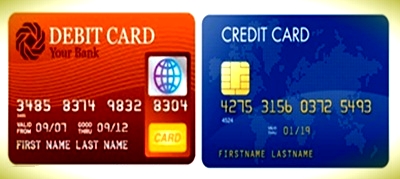
Debit and credit cards are little rectangular plastic cards issued by a monetary establishment, for example, a bank or credit union. The primary motivation behind a debit card is to permit the account holder to access the cash in their account without really making a trip to the bank amid authority bank hours. Though, the credit card is utilized to purchase things or make instalments on a credit line.
Debit Card
A debit card, which is also known as a bank card or check card, is usually a plastic installment card that gives electronic access to the cardholders to their bank account(s) at a monetary organization. The card, when acknowledged, can be utilized rather than money when making purchases. Now and again, the account number is given only for use on the Internet, and there is no physical card. Debit cards, for the most part, likewise take consideration moment withdrawal of money, functioning as the ATM card for taking out money. Vendors might likewise offer cash back services to clients, where a client can withdraw money alongside their purchase.
Credit Card
A credit card is an installment card issued to clients or cardholders as a system for payments. It permits the cardholder to pay for services or good of the holder’s guarantee to pay for them. A credit card permits the customers proceed with a balance of debt, subject to an additional amount being charged. A credit card can be utilized like money by the cardholder. A credit card normally includes an outsider element that pays the dealer and is repaid by the purchaser.
Debit vs. Credit Card
Some differences exist between debit and credit cards, which are explained below:
| Aspect | Debit Card | Credit Card |
|
Definition |
Debit cards are used any time you purchase something, and cash is deducted from your account. With a debit card, you can truly just spend the cash that you have available to you. |
Credit cards are lines of credit. When you utilize a credit card, the holder puts cash toward the purchase. This is a credit you are expected to fully pay back (ordinarily within 30 days), unless you need to be charged interest. |
|
Credit limit |
A debit card is connected to a balance in the holder’s account. At whatever point the check card is utilized, the bank charges the said amount from the owner’s account. |
A credit card usually has a limit on it, as distributed to the owner by the organization of credit card. The holder can charge up to as limit. At the end, the owner has to pay the entire sum or pay it afterwards with the interest appropriate. |
|
PIN code |
Debit cardholders are issued a PIN to use in consideration of withdrawals. This PIN can conceivably be utilized for purchases. |
In credit cards, PINs are by and large not utilized for transactions. However, they may be utilized for money withdrawals. |
|
Appearance |
A debit card is a rectangular plastic card having the name of a bank or institution. In debit card, the logo is highlighted which is of a noteworthy installment preparing system, for example, Visa, or MasterCard. |
A credit card is also a rectangular plastic card having the name of the bank, but in an ATM system, the logo is not highlighted, which is of an ATM system supplier. |
| Bills |
No monthly bills are levied for using a debit card. |
There is a monthly bill for using a credit card. |
|
Application |
In issuing debit card the application process is very easy, with fundamentally no obstruction to getting a debit card. |
For a credit card, the application process is difficult to some extent, and it also depends upon one’s financial assessment and other details. |
|
Interest |
In debit card, no interest is there for the reason as no money is taken as a loan. |
In a credit card, if the bill is not fully paid, interest will be charged on the remaining balance, and the rate of interest is extremely high. |
| Security | In debit cards, PIN helps in securing the card so no one can use or steal your card and unless you lose the information too. So, it leads to good security system. | In credit cards, PIN is not there, so they are not as secure as if your card is stolen, the person can use your card. So, it has a poor security system. |
|
Fraud liability |
In a debit card, the fraud liability is extremely high. On the off chance that somebody takes your card and makes purchases, that cash is withdrawn from your account. The more you hold up to report the misrepresentation, the more likely you will be held liable for your losses. |
In a credit card, the fraud liability is low. If you are, you are just held at risk for a small amount. |
Spend Smart: Debit or Credit—What’s in Your Wallet?
Swipe left or swipe right, it’s a decision we make daily. But when it comes to credit vs. debit cards, that decision might dictate your spending patterns, credit rating, and even your financial security.
Debit cards are simple. You use what you have, nothing more. Connected directly to your bank account, they’re ideal for those who wish to stick to a budget and not get into debt. No monthly fees, no interest. Just your own money, transferred from your account to the seller.
Credit cards, by contrast, are flexible. They allow you to borrow and repay later. That can be a good thing in a pinch or for establishing credit, but it’s expensive. When you don’t pay the total amount, interest charges kick in, and they tend to be high. Credit cards do, however, have rewards, benefits, and more fraud protection.
So, what’s the smart thing to do?
Use a debit card for everyday spending and improved control.
Use credit for large purchases, shopping on the web, or establishing credit history, just pay it off promptly.
Both cards belong in the modern financial arsenal. One keeps you on solid ground; the other provides you with wings, if you use them responsibly.
The best plan? Don’t just select one. Know both.
Because responsible spending isn’t about swiping, it’s about getting every swipe to matter.
Conclusion
From the above article, we come to know that debit cards can be used any time you purchase something, and cash is deducted from your account. Whereas a credit card is an installment card issued to clients or cardholders as a system for payments. There is no limit on debit cards, but there is a limit on credit cards. Debit cards have a PIN code with it, but this is not the case with credit cards. No monthly bills and interest are there with the debit card, but both of these are there with a credit card. Debit cards are more secure as compared to credit cards, but have higher fraud liability than credit cards.
Which card do you prefer for your daily purchases, debit or credit?

Credit Card is critical, there is a chance of interest.
yes it is.