
Difference between Outsourcing, Offshoring and BPO
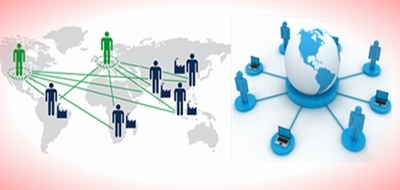
In the business field, there are a bunch of procedures or capacities involved in working it, and the larger the organization, the more intricate the procedures become. Inner issues might emerge; for example: administration, lack of workers’ capability, absence of focus on center skills, and operational expenses. For each extra process, new challenges are arising and once in a while, adding labor inside of the organization to perform such capacities is not, in business sense, a smart thought. It is costly, laborious, and problematic. Here we discuss three processes that are outsourcing, offshoring and BPO. Outsourcing means an organization which has made a contract with a third party to work with. However, off-shoring means going to various countries for work. Moreover, BPO is a special form of outsourcing. It is used when a non-primary business is handled by a third party. Contrasts exist between these processes. They are going to be explained below.
Outsourcing
Outsourcing is the procedure where an organization contracts with a third party, i.e. a company or individual, to execute some work of the organization on their behalf. The third party, either a company or an individual, called the outsourcer, might take the necessary steps within the same nation, or might take it to another nation. The amount the company pays to a third party is regularly connected to the outcomes the company gets. The company normally is not included in choosing staff to execute work, or in specifically managing work, or organizes the staff of third parties. The staff individuals are totally in control of third parties and get direction from their company, as the client company has no intervention in this.
Off-shoring
Off-shoring is the process by which an organization (the customer) connects with a middle person who is based offshore and offers the customer to draw in some assistance with staffing in that nation. The customer has direct administrative control over the staff and is included in the enrolment procedure to choose their offshore group. The mediator’s administrations range from basically helping with enrolment through to a full administration offering, which incorporates enrolment, training, methodology help, human resource management, IT support, and the procurement of office facilities.
BPO
Business Process Outsourcing (BPO) occurs when a business’s specific responsibilities and operations are outsourced to a third-party business. Some examples of BPO are HR, sales, shipping, and customer service.
Outsourcing vs. Off-shoring vs. BPO
Definition
- Outsourcing is a term for a business where the work is done by third party.
- Off-shoring is a term for business where the work is done outside the nation or range of the customer.
- BPO is a specific form of outsourcing that manages special business tasks and responsibilities related to business. It can be divided into back-office outsourcing and front-office outsourcing. BPO includes tasks like data management, data entry, payment processing, and account support, quality assurance, operating emails, telephone, fax, text, and other interactions with customers.
Choose
- Outsourcing is an alternative frequently chosen by huge organizations to dispose of specific routine work which can be executed by a third party for a fee.
- Off-shoring is frequently selected because business processes cost less in different places.
- BPO is chosen for specific operations and business responsibilities. These tasks are given to specialized third-party companies.
Concentration
- Outsourcing is typically done to safeguard human resources so that the company can concentrate on its core competencies.
- Off-shoring is essentially the same, yet its concentration is more on cost-cutting.
- BPO concentrates on specializing in providing efficient services related to some business operations. It is cost-efficient and helps build a good reputation among customers.
Place of work
- Outsourcing is possible in the same area or locality, thus not harming the local labor market.
- Offshoring, since work is done outside of the nation, it might have some inconvenient impacts on the local labor market.
- BPO does not impact the local labor market as it engages a new team to perform the tasks. So, it employs more specialized people.
Drawbacks
- Outsourcing is done on local premises, so there are no communication or language barriers.
- Off-shoring is done abroad, so it can have noteworthy communication or language barriers.
Advantages
- Usually organizations outsource to get specific advantages, cost efficiencies, specialized skills and labor flexibility.
- The advantages of off-shoring are typically lower costs, better accessibility of skilled labor, and faster completion of work through a worldwide ability pool.
- The advantages of BPO are that it provides outsourcing services for operational activities. It helps in specialisation of business branches and helping the business to grow.
Modern Strategies: How Businesses Use These Models to Scale Smartly
In today’s global economy, companies are always looking for smart ways to save costs without losing their competitiveness. Offshoring, outsourcing, and BPO come into the picture as survival strategies. Many technology companies outsource software testing to other teams so that they can focus on innovation. This allows their own engineers to focus on high-priority projects without being distracted by routine testing cycles.
Offshoring, in contrast, is picking up with startups and SMES looking to grow globally. Customer service is frequently offshored to destinations such as the Philippines or India, not merely for cost, but for the large talent pool and round-the-clock support capabilities. Offshore employees frequently become part of the firm as an extension, rather than merely a stand-alone unit.
BPO, on the other hand, is today a favored method for companies that would rather have experts handle specific functions. For example, most online businesses today outsource logistics, returns, and even internet marketing to BPOs. This gives them access to industry expertise without having to establish in-house departments from scratch.
While each model has its advantages and disadvantages, they have collectively pushed even small firms to expand faster and more effectively. The real trick is choosing the right mix based on business goals, finances, and customer needs. Local outsourcing, global offshoring, or process-focused BPO, always, there must be a focus on long-term value creation and flexibility in operations.
Conclusion
From the above article, we know that outsourcing is a term for a business where the work is done by a third party. While, offshoring is a term for businesses where the work is done outside the nation or range of the customer. Outsourcing is selected to get rid of specific routines while the other is chosen to cut costs. Outsourcing concentrates on protecting human resources while other has concentration on cost-cutting. Outsourcing does not harm the local labor market while other does. Drawback of communication and language barriers are present in off-shoring but not in outsourcing. The main advantage of outsource is cost efficiencies, specialized skills and labor flexibility. In contrast, the advantage of off-shoring includes lower costs, better accessibility of skilled labor, and completing work speedier through a worldwide talent pool. BPO is an acronym for business process outsourcing. It is a kind of outsourcing where a company hires a third party to provide non-primary business activities. It can include activities like payroll, human resources, accounting, customer relations, or some IT-enabled services.
In your opinion, which option is more effective or beneficial?

Offshoring is to hide yourself from market.