
Difference between Shakespeare and Edmund Spenser
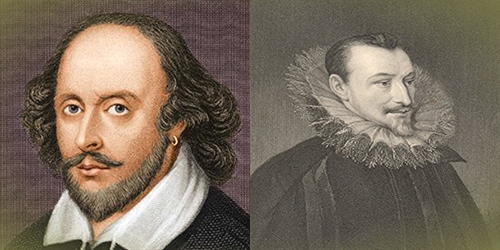
In the tunnel of literature, we come across various gems. We have all heard of Shakespeare and many other literary treasures. Shakespeare’s Hamlet, his poetic compositions, and his tragedies are embedded in our minds, making it hard to deny our love for them. The former is the poet of nature, while the latter is more closely associated with purity in relationships and faith. Being a lover of nature, Shakespeare began his travels and ultimately wrote tragedies. On the other hand, Edmund Spenser was also a poet of nature. In his works, we encounter complex diction along with different sonnet styles. However, there is a significant difference between Shakespeare and Edmund Spenser:
Shakespeare
William Shakespeare was an English poet, playwright, and actor, born on 26 April 1564 and died on 23 April 1616. He was married to a lady named Anne Hathway in 1582. He wrote during the reign of Queen Elizabeth 1. He is regarded as England’s national poet. He is called the ‘Bard of Avon’ as he was born in Stratford-upon-Avon. After his marriage, he wrote up a number of sonnets. At that time, his writings reached a high point and high reach. Shakespeare, in the meantime, started intermingling with nature and wrote several poems like A Fairy Land, a Fairy Song, Bridal Song, Dirge, Aubade, A Madrigal, A Lover’s Complaint, Carpe Diem, and many others. He was a poet of nature and language. His works are mainly known for his love of nature.
Edmund Spenser
Edmund Spenser was an English poet born during the reign of the Tudor dynasty. He was born in London. He is recognized as one of the premier craftsmen of Modern English verse. His famous poems are Wrenock, The Faire Queen, the Shepheardes’ Calendar, Tears of the Muses, Iambicum Trimetrum, and many others, which reflect his psyche and thoughts towards the world.
Shakespeare vs. Edmund Spenser
Difference in their Sonnets
Shakespeare’s works have been recorded and maintained in the form of manuscripts. Spenser, who was perhaps the most religious of the poets, Christianized Neo-Platonism, applied his belief and faith to some of his work, as in the case of innocent marriage in Amoretti. And of course, Shakespeare takes Neo-Platonism to a completely diverse level, picturing and describing a man instead of a woman, portraying women significantly negatively in almost all his sonnets.
When we compare these with Elizabethan era’s sonnets, we can say that Shakespearean sonnet uses 3 quatrains followed by a rhymed couplet. It follows the rhyming scheme of abab cdcd efef for three quatrains and gg for the couplet. It makes use of seven syllables. The beginning of the third quatrain marks the Volta to show a ‘turn’ in the mood of the poem. Here, the poet expresses a revelation or epiphany. The closing couplet summarizes the entire poem. An example of the Shakespearean sonnet is Sonnet-18: Shall I Compare thee to a summer’s day?
On the other hand, when it comes to the Spenserian sonnets, it uses three quatrains as well with a rhymed couplet. It follows the rhyming scheme of abab bcbc, cdcd, and ee with the notion of 5 syllables. It has a quatrain made up of 3 Sicilian quatrains. The metre is iambic pentameter. It uses a Volta sometime after the second quatrain, and epiphany is arrived at logically. There is a metaphor, conflict, or idea in each quatrain, and the rhyming couplet provides the resolution. Some examples of Spenserian sonnets are Amoretti, Sonnet LXV,
Their Beliefs & Views on Religion
When we consider their beliefs regarding Christianity and other religions, especially in two of the poets’ works, namely, Spenser’s 22, and Shakespeare’s 151, the poets explain their differences. Spenser, according to his religious beliefs, Christianizes Neo-Platonic suppositions and applies them to his marriage; At the same time, Shakespeare instead decides to reject, even goes to the extreme of mocking that Neo-Platonic tradition and gives importance to the role of men while transmitting an anti-traditional female image. Spenser wastes too much focus on Neo-Platonism in his simpler, more frank sonnets; though, when he does include Neo-Platonic thought, he makes it Christian, placing it in the Christian point of view.
Famous Works
When it comes to Shakespeare, he is famous for writing tragedies, comedies, tragicomedies, and sonnets. His plays were dramatized in public and private theatres throughout England. One of the famous theatres is the Globe Theatre. His Hamlet is based on the philosophy of existentialism, in which the tragedy of a being is discussed. Other plays from the pen of the great playwright are:
- Macbeth
- King Lear
- Romeo and Juliet
- Hamlet
- Julius Caesar
Comedies written by Shakespeare are:
- A Midsummer Night’s Dream
- Merchant of Venice
- As You Like It
- Much Ado About Nothing
Problem plays written by Shakespeare are:
- Measure for Measure
- All’s Well That Ends Well
Some tragicomedies written by Shakespeare are:
- Prince of Tyre
- The Winter’s Tale
- Twelfth Night
On the other hand, Spenser is mainly known for his Faire Queene, in which he is more concerned with the display of the purity of knights and women. Some other notable works are:
- A Hymn in the Honour of Beauty
- A Ditty
- Amoretti III: The Sovereign Beauty
Literary Giants of the Golden Age: Shakespeare and Spenser’s Contrasting Artistry
The Elizabethan era witnessed the rise of two giants of literary personalities whose unique modes of perceiving poetry and theatre reshaped English literature eternally. Shakespeare and Edmund Spenser, though contemporaries, left enormously different artistic inheritances based on their contrasting styles, subjects, and philosophical perceptions.
William Shakespeare transformed drama and poetry through his psychological realism and universal themes. The “Bard of Avon” wrote 37 plays and 154 sonnets that examined human nature’s complexities to a greater level than ever before. His Shakespearean sonnet structure of three quatrains and an ending couplet became the model for English sonnets. Tragedies by Shakespeare were popular with social classes, addressing also the groundlings as nobles at the Globe Theatre. His tragic figures, like Hamlet, embody existential issues still alive after centuries.
Edmund Spenser elevated English poetry with exalted allegory and didactic morality. His city supported met “The Faerie Queene” marrying her romance, adventure, and Christian morality to epic praise of Elizabeth I’s reign. Spenser created the Spenserian sonnet form with its entwined rhyme scheme (abab bcbc cdcd ee), creating musical interdependence in his poetry. His “Amoretti” sonnet sequence neo-Platonic philosophy of love, Christianized, making marriage sacred, not passionate.
Their religious views were somewhat different. Spenser accepted Protestant Christianity, filling his writings with ethical didacticism and spiritual allegory. Shakespeare cultivated intentional religious ambivalence, using humanistic themes rather than necessarily Christian ones. This difference reflected on their handling of love. Spenser idealized courtly romance with chaste wedlock, while Shakespeare portrayed love’s more sinister paradoxes and contradictions.
Modern writers continue to pick up lessons from their methods: Shakespeare’s characterization and Spenser’s plot sensitivity continue to resonate with contemporary narration and poetry.
Conclusion
Shakespeare and Spenser are those legends upon whose shoulders the giants of English Literature stand. They have given new forms of writing to the world. Also, they have provided an insight into the Elizabethan era. Their writings are, undoubtedly, still applicable in today’s era also.
What is your point of view?

Leave a Reply