
Difference between Capitalism, Socialism and Communism
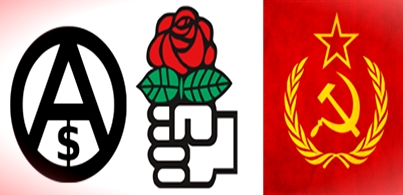
Capitalism, socialism, and communism are fairly restrictive schools of thought in economics. Socialists think economic disparity is terrible for society, and the government is in charge of decreasing it through projects that benefit poor people. Then again, capitalists think that the government does not utilize resources as proficiently as private enterprises do, and along these lines, society is in an ideal situation with the free market. Numerous nations host overwhelming socialist political gatherings, yet not very many are communist.
Capitalism
Capitalism refers to an economic structure that depends on personal ownership for production inputs on services, and product production to get profit. The making of products and services depends on demand and supply in the market (market economy), instead of through focal arranging i.e. planned economy. Capitalism is, for the most part, portrayed by rivalry between producers. Different features, for example, the investment of the government in regulation and production, change the models of free enterprise.
Socialism
Socialism is an economic and social system that is described by social possession and control of the means of production. In addition, there is a political hypothesis and movement that goes for the foundation of such a system. Socialism underlines equality as opposed to accomplishment. It qualifies laborers by the measure of time they put in, instead of by the measure of worth they create. It makes people reliant on the state for everything from nourishment to medical services.
Communism
In easy words, communism is a culture in which private ownership and societal class don’t exist and the government claims all things important to make and transport items. Communism is, by and large thought to be the inverse of capitalism, which is a society that underscores private ownership and the private deal and exchange of products.
Capitalism vs. Socialism vs. Communism
Here is the contrast that exists between these three systems, i.e., capitalism, socialism, and communism.
Definition
- Capitalism is a system of social association that depends on the order of privatization and a free market in which own property is credited to the individual entity. Intentional co-proprietorship is likewise allowed.
- Socialism is a system of social association in light of the holding of property in common, with real proprietorship credited to the labourers.
- Communism is a worldwide system of social association with a view of holding all property in like manner, with real possession attributed to the group or state.
History
- Capitalismhas existed in the society for a long time. It is directly related to the terms power, profit, and bourgeois hegemony. It allows the rich bourgeois class to dominate the proletariat through the means of production.
- Socialism came a few decades before communism. It focused on the egalitarian distribution of wealth, a union among the working proletariat, better working conditions, etc. It was started by Henri de Saint-Simon. His followers, like Robert Owen, Charles Fourier, and Pierre Leroux, developed the idea of utopian socialism.
- Communism has its roots in the “Communist Manifesto”. It lays out the history of the struggle between the economic classes. Communism came up as a protest against the violent capitalist society. According to Karl Marx, the proletariat would take control of the means of production. There will be no government interference, and soon production and consumption will reach an equilibrium.
Philosophy
- In capitalism, capital is possessed, worked, and exchanged to get profits for private proprietors or shareholders. The main focus is on individual benefit as opposed to laborers or society. There is no limitation on who may possess capital.
- In socialism, the philosophy is that according to the capacity of an individual, to according to his contribution. The main focus is on profit being properly distributed among the general public or workforce to supplement individual wages/pay rates.
- In communism, philosophy is according to the capacity of an individual, to according to his needs. The main focus is to motivate people to work more.
Economic system
- In capitalism, market-based economy is consolidated with corporate or private ownership as a method of creation. Merchandise and administrative services are delivered to make a profit, and this profit is reinvested into the economy to fuel economic development.
- In socialism, the means are owned by open ventures or cooperatives, and people are repaid according into account the principle of individual commitment. Production might be composed differently through either monetary planning or markets.
- In communism, the means are held in like manner, refuting the idea of private ownership in capital products. Production is sorted out to accommodate human needs, specifically with no utilization for cash.
Ownership
- In capitalism, production means are privately owned and used to get private profit. This compels motivation for producers to take part in financial and economic activity. Firms can be claimed by people, laborer communities, or shareholders.
- In socialism, production means are socially owned.
- In communism, production means are commonly possessed, which means no individual or entity claims profitable property.
Examples
- The United Kingdom, the United States, and Hong Kong are, for the most part, capitalist. Singapore is a case of state capitalism.
- Union of Soviet Socialist Republics (USSR): despite the fact that the genuine classification of the USSR’s monetary framework is in question, it is regularly thought to be a type of midway planned socialism.
- The examples of communist states are the recent Soviet Union, North Korea, and Cuba.
Beyond Ideologies: Modern Variations and Real-World Hybrids
Nowadays, capitalism, socialism, and communism merge more than ever. There is seldom a fully developed example of any of these systems. Most contemporary nations now operate hybrid models based on components that fit functional rules and world integration.
For example, Scandinavian countries like Sweden and Norway are erroneously considered to be socialist countries. However, they actually possess capitalist economies with strong social welfare systems, a model referred to as the Nordic model. There are free markets in this, accompanied by high taxes to finance universal healthcare, education, and income protection.
On the capitalistic side, the U.S. is shifting as well. While it is still a market economy, government stimulus packages, student loan forgiveness programs, and Medicare expansions within the last several years suggest a tilt toward state intervention in periods of need, things long ago deemed socialist.
In modern China, the mix is more blended. China officially subscribes to “socialism with Chinese characteristics,” but in practice, it operates state capitalism: allowing private enterprise under tight state control, with strategic sectors like technology, banking, and energy dominated by state-owned companies.
Although communism, as Marx envisioned it, a classless, moneyless, stateless society, has never existed, nations that are classified as “communist” are better characterized as authoritarian states with centrally planned economies.
As globalization continues to grow, economies increasingly borrow from all three systems. The debate is no longer about which ideology is “best,” but about which combination best promotes equity, innovation, and sustainability in a fast-changing world.
Conclusion
Most remarkably, capitalism is an economic system that deals with privately owned inputs, while communism is a political framework. Socialism is principally an economic framework that can exist in different structures under an extensive variety of political frameworks.
Which ideology do you think supports a more sustainable and fair society?

capital may exchanged to get profits for interesting people e.g Stakeholders.
yes it could be one .