
Difference between Developed,Under-developed and Developing Countries
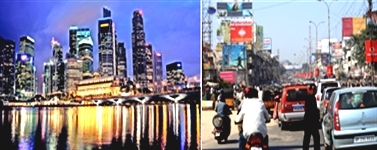
Countries are classified based on economic development. The United Nations groups nations as developing, under-developed, or developed. The World Bank arranges nations as indicated by their GNI per capita pay. The order of a nation relies upon its income as well as on different variables that influence how its public lives, how the economy is incorporated into the worldwide framework, and the expansion and growth of its trade businesses. This article deals with the differences between developed, under-developed, and developing nations.
Developed Nation
A developed nation has a very high level in industrial advancement. It is known for constructing its economy in light of innovation and assembling; rather than pursuing agribusiness. The variables of production, for example, human and regular assets, are completely used bringing about an increment underway and utilization which prompts a very high rank in per capita salary.
A nation with a high Human Development Index (HDI) is viewed as a developed nation. It not just measures the financial improvement and GDP of a nation, but also its instruction methodology and future.
Under-developed Nation
An Under-developed nation is one that has a very low human development index. The natural and human resources are available in abundance, but are not put to any good use in such nations.
Developing Nation
A developing nation is one having a way of life or level of modern advancements well beneath that conceivable with money related or specialized guide; a nation that is not yet exceptionally industrialized. A country having less utilization of resources and low per capita income which leads to low GDP of the country is called a developing nation.
Developed vs. Developing vs. Under-developed Countries
Industrial Economy
- In developed countries, the economy depends on the industrial sector instead of the agricultural sector. There is more development in the industrial sector.
- In developing countries, economy mostly depends on the agriculture sector. Such countries tend to move towards industrialization.
Citizens
- In developed countries, citizens are well-off and financially stable.
- In developing countries proportion of rich citizens is very low.
Unemployment
- In developed countries, there is no such issue of unemployment. They provide many employment opportunities to the citizens.
- In developing countries issue of unemploymentis there and it affects the economy of country very badly.
Education
The growth rate in the education sector is very high in developed countries, and they have the best education systems. Whereas the growth rate of developing countries in the education sector is low as compared to developed countries. While developing countries are following the education models of developed countries to achieve the standard.
Technological advantages
- In developed countries, every place is full of technological advancements, and they always try to make it better.
- In developing countries, there are many undeveloped rural areas, and even the urban sector has less technological advancements.
Roads and Infrastructure
- Developed countries have a very sound infrastructure by having better roads, railway tracks, airports, etc.
- Developing countries don’t have a sound infrastructure as compared to developed countries. The money paid by taxpayers is invested in more important issues like defense, education, etc.
Government
- There exists a stable government in developed countries so that they make effective and reliable policies for better economic development.
- Developing countries have unstable governments that mostly try to follow the policies made by developed countries.
Health care
- In developed countries, good and better facilities for health are provided to citizens.
- In developing countries, health care facilities are not good and acceptable.
Resources
- In developed countries, the natural and human resources are fully and efficiently consumed.
- In developing countries, many of the natural resources are still untouched, and other resources are also not fully utilized.
- Under-developed countries have ample natural and human resources. But these resources are not put to any use. There are no good leaders who can unite the land, labour, capital, and entrepreneurship. Thus, such countries suffer at the hands of looting by some of their wealthy, greedy citizens or some foreign countries.
Income
There is a high level of income as per citizen living in a developed country, so that they have high GDP and GNP. Developing countries have a low level of income as per citizen living in countries with unequal distribution of income as they have low GDP and GNP.
People don’t have employment opportunities, and per capita income is next to negligible. Most of the population falls below the poverty line i.e. people are unable to make both ends meet and secure two meals a day for themselves. This badly affects the GDP and GNP of the nation. Poverty becomes a paradoxical condition, and the government doesn’t have enough funds to increase the standard of living of its citizens.
Human Development Index (HDI)
- In developed countries, there are the best education systems and better health care and high income level so this leads to a high value and ranking of HDI.
- In developing countries, there are low income levels and fewer facilities for health care and low rates of education, so this leads to low or middle ranking in HDI.
- Under-developed countries score very low on the Human Development Index. Educational facilities and health care are missing in such countries. Also, people don’t get the funds allotted to them due to loopholes and corrupt bureaucracy.
Life expectancy
- In developed countries, due to better health care, the life expectancy has increased. Such countries have a low birth rate as well as a low death rate.
- In developing countries, life expectancy is not so high but has high rates of birth and death due to fewer facilities and lack of education.
- Under-developed countries have high birth and mortality rates. This is due to the unavailability of education, contraception, and proper medical assistance. Children are born and not taken care of. The conditions of adults and elder people are also ruthless.
Water and food supply
- In developed countries, safe and clean water is supplied with a plentiful supply of food items and good housing conditions.
- In developing countries, dirty and unsafe water is supplied with less reliable food items and poor conditions of houses.
- Under-developed countries face the problem of very poor hygiene conditions. Fresh food and clean drinking water become a subject of question. People die due to malnutrition.
Nations in Progress: A World Divided by Development
Not all nations move in lockstep. Some are forging the way of innovation, and others are sprinting to get back up onto the most basic of essentials. Developed, developing, and under-developed are more than economic descriptors; those terms tell us how human beings live, survive, and persevere.
Developed countries are where there is immense opportunity. Well-developed infrastructure, quality education systems, quality health care, and stable incomes define such countries. Such individuals live in comfort, stability, and security. Technology pervades their surroundings, and government services are effective.
The third world countries are coming along. They have issues with unstable governments, horrible health care, and bad schools but they’re trying. The urban areas in these nations are thriving, but the rural areas are not doing well. There is progress, just not equal.
And then the poor, the under-developed countries, left most often behind. Here, poverty runs deep. There is no clean water, medicine, or food. The children perish before they are grown. Resources abound, natural resources, human capacity, but corruption and mismanagement hold them back from reaching their full potential.
Yet names do not make destiny.
Through sensible policies, education investment, and global cooperation, the developing world can elevate itself. Under-developed countries can develop their capabilities and give their people an equal chance. Not overnight, perhaps, but it can.
Not just a matter of GDP is under-development’s turn towards development. It’s dignity—enabling every human to be safe, learn free, and dream boundless.
Because a larger world isn’t built out of dollars, it’s built out of picking each other up.
Conclusion
From the above discussion, we come to know that developing and under-developed countries face a lot of problems in the way of development. These problems can be solved only through good governance and the spread of education among the masses.
What is your opinion on how under-developed countries can overcome these challenges?

It really helped me
we are always happy to help you/
It’s usefull
welcome.
Hi it is useful thing for children
What kind of children. Its for all.
Awesome
Its fantastic.. thanks for the article.. used it in a project
Its fantastic.. thanks for the article.. used it in a project
Please just give a reference when using in the project. Thanks