
Difference between Muhammad Ali Jinnah, Mahatma Gandhi and Nelson Mandela
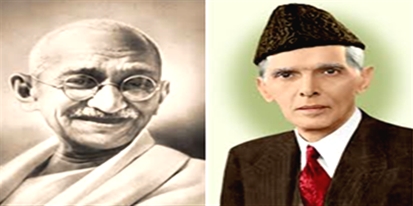
Great men like Jinnah, Gandhi, and Mandela inspire youth with their love for their country and mankind. Current India and Pakistan were molded by two men: Mohammad Ali Jinnah and Mahatma Gandhi. This article investigates the contrasts between these two makers of new nations. Looking at Gandhi, Jinnah, and Mandela is a complex practice, as their motive was the freedom movement. Gandhi and Jinnah belonged to Gujarat and were in the same profession, but had different objectives and personalities.
Muhammad Ali Jinnah
Muhammad Ali Jinnah was a legal counselor, legislator, Indian Muslim statesman, and founder of the country named Pakistan. He was born on 25th December 1876 and died on 11th September 1948. He crusaded for the segmentation of India into isolated Hindu and Muslim states. He turned out to be the first Senator General of Pakistan from 1947 to 1948. Jinnah worked as a pioneer of the All-India Muslim League from the year 1913 till Pakistan’s freedom on 14th August 1947. He is loved in Pakistan as Quaid-i-Azam (The Great Leader) and Baba-e-Qaum (Father of the Nation). His birthday is seen as a national holiday.
Mahatma Gandhi
Mohandas Karamchand Gandhi was the transcendent pioneer of the Indian freedom movement in British-ruled India. He was a Hindu religious pioneer, patriot, and societal reformer. He was born on 2nd October 1869 and died on 30th January 1948. Utilizing peaceful common non-violence compliance, Gandhi drove India to autonomy and propelled movements for social equality and flexibility around the world. He is likewise called ‘Bapu’ in India.
Nelson Mandela
Nelson Mandela, a South-African revolutionary political leader, was born on 18 July 1918 and died on 5 December 2013. He became the country’s first black head of state and served as President of South Africa from 1994 to 1999. He is lovingly referred to as ‘Madiba‘- ‘Father of the Nation’.
Jinnah, Gandhi, and Mandela: Three Leaders, Three Legacies of Freedom
Religion
- Jinnah was a Muslim by religion
- Gandhi was a Hindu by religion.
- Nelson Mandela was a Christian
Political Party
- Jinnah was a member of the Indian National Congress from 1906 to 1920. Then, he pioneered the establishment of the All-India Muslim League. He was an active member of this party from 1913 to 1947. Later, he became and remained a part of the Pakistan Muslim League from 1947 till his death.
- Mahatma Gandhi was the President of the Indian National Congress throughout his life.
- Nelson Mandela served as the president of the African National Congress from 1991 to 1997. He was a member of the South African Communist Party, also.
Leader
- Jinnah was called a leader by motivation.
- Gandhi was called a leader by example.
- Mandela is regarded as an icon of democracy and social justice.
Personality
- Jinnah was the main skillful opponent.
- Gandhi exceeded expectations as a dynamic protester.
- Mandela was a practical politician rather than an intellectual scholar.
Intelligence
- Jinnah was more intelligent than Gandhi as he made Pakistan using his intelligence only.
- Gandhi was more concerned about his religion. He was indeed clever, however, in his variant.
- Mandela was a radical revolutionary. According to him, violence becomes a necessity when the government tyrannizes the nation.
Objective
- Jinnah’s objective was to create a country to get separation from the Hindus and the British.
- Gandhi’s objective was to free India from the British.
Respect
- Jinnah was a legal advisor and more legitimate. He battled for Pakistan through the law, acquiring respect.
- Gandhi was an extremely quiet, mild-mannered man and acquired respect from the like-minded but hatred from the radicals for the partition of the India.
Marriage
- Jinnah married a Parsee out of adoration. He had two wives: Emibai Jinnah from 1892-93, and Rattanbai Jinnah from 1918-29.
- Gandhi, like numerous Hindus, was married at six years of age and within his cast. His wife’s name was Kasturba Gandhi.
- Mandela had three marriages. He married Ebelyn Ntoko Mase in 1944 and got a divorce in 1958. His second wife was Winnie Madikizela. They divorced in 1996. Later, he married Graca Machel in 1998 and remained with her till his death.
Way of Living
- Jinnah acted extremely English in his way of dressing, talking, and also because he was a lawyer.
- Gandhi acted exceptionally Indian in his cultural way about dressing and talking.
Reference of Father
- Gandhi was born in a well-known family as his father was a political figure in Porbandar. He helped Gandhi unceasingly.
- Jinnah did not get that advantage which helped him in politics.
Power
- Jinnah was a wellspring of power.
- Gandhi was an instrument to gain power.
Behavior
- Jinnah was an arctic pragmatist in legislative issues, he had a one-track mind, with incredible power behind it. He was possibly kind, yet in conduct exceptionally icy and inaccessible.
- Gandhi exemplified empathy. His impulses were established in India and deep-rooted. He dirtied his hands helping the dingy poor.
Notable works & Awards
- Mahatma Gandhi’s notable book is ‘The Story of My Experiments with Truth’.
- Nelson Mandela’s most notable work is ‘Long Walk to Freedom’. He received the Nobel Peace Prize in 1993.
Architects of Freedom: The Divergent Paths of Jinnah, Gandhi, and Mandela
Three great leaders charted the course of millions with their unshakeable faith in liberty, but the philosophies and strategies of these three differed widely. Muhammad Ali Jinnah, Mahatma Gandhi, and Nelson Mandela all fought colonialism and racialism based on race in their quest for independence.
Muhammad Ali Jinnah was pragmatic in his determination to pursue Muslim independence. The politician-barrister transformed from secular politician to pro-partitionist, as evidenced by the fact that independent states would safeguard minority rights. His lifestyle, westernized and legal courtesy, stood in direct contrast to conventional Indian political practices. Jinnah’s two-nation theory transformed subcontinent politics by producing Pakistan through constitutional action rather than pushing aside mass movements.
Mahatma Gandhi changed resistance by the use of satyagraha, truth-force, embracing nonviolence and civil disobedience. His simple style of life and spiritual leadership touched the lives of millions of people from religious and social classes. Gandhi’s charkha and salt march were symbols of freedom from British exploitation and became universal. His violent assassination was a reflection of how his vision of universality unnerved communal extremists.
Nelson Mandela transformed from a warring revolutionary to a reconciling leader after spending 27 years in prison. His transformation from armed struggle to negotiation ended the racial civil war of South Africa. Mandela’s vision of a rainbow nation transcended apartheid’s race-segregation through his Truth and Reconciliation Commission. His moral leadership transformed former enemies into governing partners.
World leaders of today continue to enhance their approach to ethnic conflict, minority rights, and post-colonial citizenship. Their legacies affirm that freedom movements become possible through various means, legal agitation, moral suasion, and reconstructive reconciliation, based on prevailing conditions and visionary leadership.
Conclusion
Jinnah, Gandhi, and Mandela were the genius-minded persons who fought for what they felt worthy. They fought for the freedom of their nations from colonialism, racial discrimination, and better living conditions. They are a role model for the next generation and today’s leaders. By following them, people can work hard for a democratic government, for the stabilization of the global population, the eradication of global war, and other threats. Wisdom and courage learnt from them can become a source of inspiration and confidence for generations.
Who was the best leader in your opinion?

Jinnah was more an more great than Gandhi
Gandhi is a phenomenon througout the world. Jinnah was good only for pakistan and hence his popularity didnt exceed outside pakistan.
Robin u realli dont know about Jinnah.that is why u admire to gandhi.gandhi just strugle for hindus.And its mean gandhi have no space for muslims in india.now u can see how hidnus attacks on muslim in indian and also in kashmir.Jinnah was hero and still and will always rememberd as a hero.he was a great leader and had beautiful peronality and well educated like british.but gandhi always just wear a lòongi and had no skills like Jinnah.that is why Jinnah made pakistan not just for muslims.And this pakistan is for all relligions.understood.if wants to know about Jinnah then go back in history and read much more about Jinnah.then u will know which leader was great.
My freind When India and Pakistan seperation happend then Pakistan was called Islamic Country,Indians also asked to make India a Hindu Country but Gandhi denied and made democrative.So now you tell me who struggeled for his religion?
If Gandhi was a Hindu leader then how muslims are living in India more than Pakistan?
Gandhi was the man who fucked Hidus and made
No, at the time of independence, Pakistan was not called “The Islamic Republic of Pakistan” Jinnah was a secular leader and a nationalist. He fought the unity of the country. He was called an ambassador of unity, but he wanted certain safe guards for the Muslims of the sub continent, to which he would not compromise. Please read the book “Secular and Nationalist Jinnah” by Dr Ajeet Jawed of Delhi University and one can make ones own mind. May I also draw attention to another very interesting quote published in a book “Shameful Flight” by Stanley Wolpert On page 141, it reads “Suhrawardy hoped to lead Bengal to independent Dominion statehood, urging Governor Burrows and Mountbatten to help him create an undivided Bangla – Desh “land of Bengali speakers”.” Two weeks later, Mountbatten asked Jinnah what he thought of Suhrawardy’s proposal to create a separate server and Bengal, expecting him to be shocked at his Muslim League lieutentant’s “treachery”. Much to Mountbatten’s surprise, Jinnah calmly replied, “I should be delighted. What is the use of Bengal without Calcutta.”…. (page 149) Maryville met with Nehru on 27 May and “I asked him how he viewed an independent Bangor. He reacted angrily and said there was no chance of the Hindus there agreeing to put themselves under permanent most the domination. He did not, however, rule out the possibility of the whole of Bengal joining up with Hindustan.” You can make up your own mind, who stands where?
India was also open for all religions. Gandhi stated himself as all of the religions. “Muslim, Buddhist, christian” and so on. Gandhi was great in his own ways, Jinnah was great in his own ways. So therefore, you cannot state that Jinnah was a better leader. Additionally I believe you should read more about Gandhi, judging from a readers point of view your I think you’ve read a bit too much about Jinnah. Lastly, your grammar and spelling is awful, please also work on that.
thanks for the details we will surely follow your guidelines.
In case you like you can send us details in word file we can update the article as per your content. We mean you can copy paste our article in MS Word file and then you can add what you want to add and highlight in yellow your added part, we will update the article and also will put put name that you have provided some material in paragraph this and that. Please email us the update article on advertise@researchpedia.info and mention this comment in quotes so that our team can update it as per requirement. Thanks once again.
No doubt, as Gandhi had said, that in India all religions can live together, but what is happening now, was not what Gandhi was talking about. I do not have to recount the events there, anyone and everyone can see it. She now wanted to avoid this and for that reason, he wanted constitutional guarantees. Nobody will deny the sincerity of Gandhi. But what happened to him, should not be forgotten either. He was killed, not by a jihadi, but by a Hindu fanatic. Now the same killer is being honoured. Gandhi and Jinnah fighting for the independence of India, both in a different way and with a different style, but the objective was the same. Before arriving in India, Gandhi practised law in South Africa, where he took up the cause of the Indian community, but I was surprised to note, that he was only concerned with the Indian community and did nothing for the indigenous South African blacks.
jinnah was great than gandhi
ok
Jinnah was a great leader, His intelligence and motivation led to the inspiration of the muslims for a separate nation
but
Gandhi was himself charisma,he was powerful enough for people to establish inner peace in them ,simply by morale beliefs and simplicity he distinguished between primitive acts and human proactive nature he was great human being as well as a great leader
Yes you are right Jinnah is better than Gandhi
…. you i am pakistani but i really respect Gandhi by the deep of my hart he was an angle man and in complete world no one could be like him he was my hero he was ban a great man i cant describe him in words he was awesome……
I am agee with u sofia
True
He did not wish to touch poor people.
Jinnah was a puppet of british. He created a nation on religion and nation created on religion cannot survive for long take examples from history.
Gandhi is and was far greater than jinnah and that’s how world knows gandhi, he inspire each and every indian, world’s great leaders like Nelson Mandela, Martin Luthur King etc. Who got inspired by Jinnah?
Pakistan will survive… In-sha-Allah
Insha Allah
Insha Allah
InshAllah
Madina was a state created on Religion and it has survived more than 1400 years and counting. Rather than just emotionally siding, better read History on neutral grounds and you will know it was Gandhi who had secret objectives of Indian independence from British, you will know the interest of US and Japan back then in this piece of land which had strategic geographic importance.
Your question in the last is an immature one and shows lack of study.
its a good example and answer
Pakistan never projected Mr. Jinnah as such
My salute for jinna..
Seriously!!!!!!!!! Shame on all that commented in agression. How on earth can you compare these two. I mean both were men of honor and dignity and fought their own fight. I respect both of them with equal measure.
can any one tell me the entire story between gandhi and jinnah
Both of them fought against opression nd injustice. When during the division of financial assets indian politicians were being injust Gandhi protested nd strted his movement. Jinnah at frst didnt like the idea of seperation. Both of them were honorable persons. Shame on those who criticize them
can any one tell me the full story of gandhi and jinnah
These people spent their lifes fighting for us nd they deserve respect. In germany in the course of masters in politics their is a chapter in which they teach abt jinnah to the students
Does anyone know if Jinnah and Gandhi met and what was said?
IF you know you can tell us please/
Jinnah won to get a separate state for Indian Muslims. He achieved his goal..
gandhi sold his wife to the british people to gain more land for india . jinnah didnt do that , he respected women . Gandhi was a ganda insan , as said .
As ignorant as yu are….Jinnah was a gr8 pork eating, alcohol consuming muslim who at age 40 slept with his friend’s 16 year daughter…and later eloped with her….eventually the girl committed suicide within 10 years of their marriage
Please provide some proves of such elegations.
he is talking about maryam jinnah
is this story that QA had relations with Maryam Jinnah before marriage at the age of 16? If it is any authentic source?
Jinnah was a short sighted man, his achivements were short term gains. Had India not been partitioned, there would have been close to 60 crore Muslims in UNDIVIDED India now and would have been a great power to recon with.
Its your personal opinion only. As you may be not a Muslim.
Ghandi and Jinnah were both Great Leaders… jinnah and ghandi was on same page … to get Azadi from Brithsh and both were commited to united the India …
but it was Congress and Nehro whom dont want to share the power with the muslims also they dont even accept the MULIM LEUGE as a reality …
india partioned due to Congress (Nehro) Only Nehro
Robin u realli dont know about Jinnah.that is why u admire to gandhi.gandhi just strugle for hindus.And its mean gandhi have no space for muslims in india.now u can see how hidnus attacks on muslim in indian and also in kashmir.Jinnah was hero and still and will always rememberd as a hero.he was a great leader and had beautiful peronality and well educated like british.but gandhi always just wear a lòongi and had no skills like Jinnah.that is why Jinnah made pakistan not just for muslims.And this pakistan is for all relligions.understood.if wants to know about Jinnah then go back in history and read much more about Jinnah.then u will know which leader was great.
Nehro have no sence like Jinnah.
Heo was only Jinnah Jinnah and Jinnah
This account of both these leaders is inaccurate and imprecise; a homework exercise for a 6 year old!!
Please then enlighten us with the real facts you think are correct.
Both were really wise guys.
i think Gandhi was murdered because he was giving away Kashmir.
its clear that
Ghandi wanted to get Subcontinent whoe from British…
while
jinnah wanted to get a country where Muslims can Enjoy thier Religious rights…m
nd Jinnah got his ambition
nd Ghandi could not…
so
jinnah is dominanat on ghandi
Tribute To Jinnah👍
As a pakistani ,we should not compare our great leader ,our father of nation with anyone because if we do so ,we are insulting our quaid . He is not a man of comparison because there is no man in the world who is able to be compared with him.
His character is the beautiful character.
As Nehru said;
Great character and great politics were two secrets due to jinnah got great success .
Sure Arbab Ahmad you may have this kind of feelings for your leader. But this is an international blog. We respect your feelings and also the feelings of other world.
Jinnah > Gandhi
In all variant ways. From dressing to etiquettes of speaking. He always stood like a rock. And finally achieved his goal.